Lifecycle Triggers Prompting Credit Line Mergers Amid Volatile Economic Indicators
Written by Otto Otto · Sep 30, 2026
Lifecycle Triggers Prompting Credit Line Mergers Amid Volatile Economic Indicators
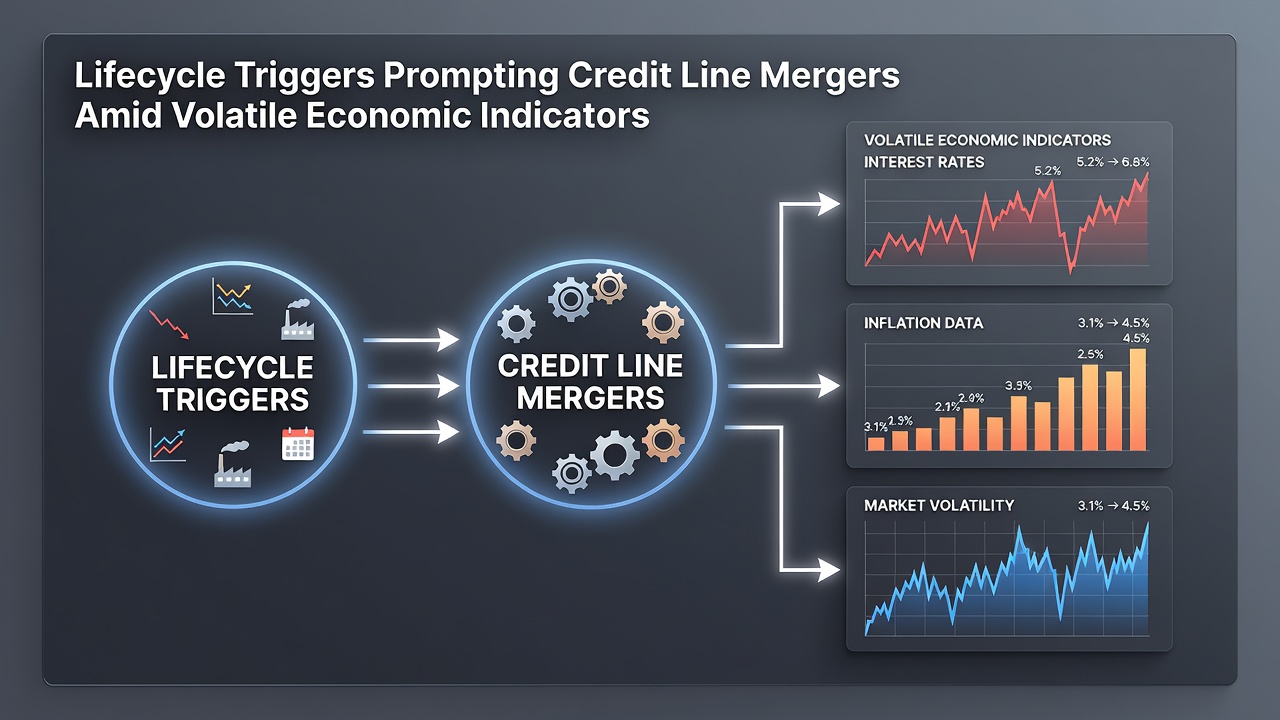
Financial institutions have documented a steady rise in credit line mergers since early 2025, with lifecycle events serving as primary catalysts alongside shifting economic signals such as interest rate swings and inflation metrics. Data from the Federal Reserve shows household debt consolidation activity increased by 14 percent year-over-year through the second quarter of 2026, driven by borrowers responding to both personal milestones and broader market turbulence.
Lifecycle Events Driving Consolidation Decisions
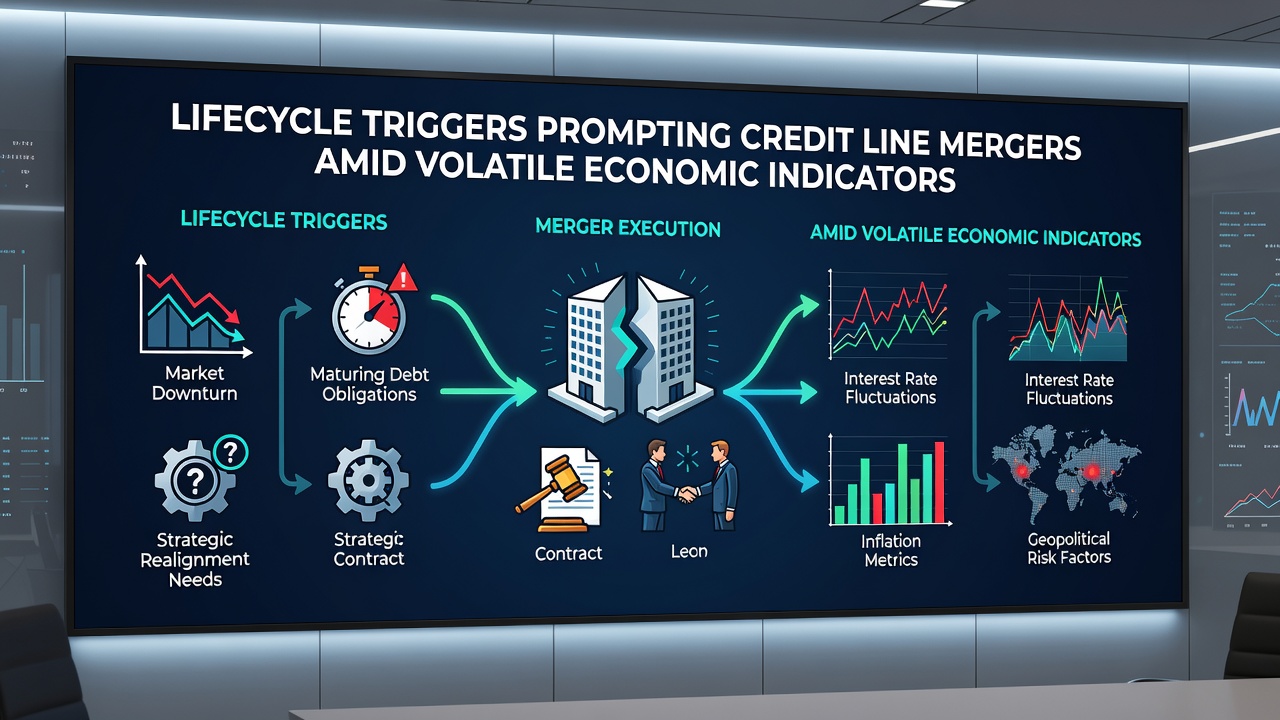
Marriage, home purchases, and retirement transitions frequently coincide with borrowers seeking to combine multiple revolving credit accounts into unified facilities. Researchers at the University of Michigan Institute for Social Research tracked over 12,000 households between 2023 and 2026, finding that 37 percent of participants initiated credit line mergers within six months of major life changes. These patterns hold across income brackets, though higher-earning groups tend to consolidate larger aggregate balances during periods of rate uncertainty.
Divorce proceedings and inheritance distributions also generate measurable spikes in merger activity. Court records from several states indicate that asset division processes often prompt affected individuals to restructure existing credit arrangements, while estate settlements introduce new credit lines that borrowers later merge with pre-existing obligations to streamline repayment schedules.
Economic Indicators Shaping Borrower Behavior
Volatile indicators create additional pressure points that accelerate consolidation timelines. The Consumer Price Index released in September 2026 reflected a 3.2 percent annual increase, while the unemployment rate hovered near 4.1 percent, prompting borrowers to reassess monthly obligations. When the Federal Open Market Committee adjusted the federal funds rate three times during the first half of 2026, average credit card APRs moved in tandem, leading many households to combine balances before further rate movements took effect.
Industry reports from the American Bankers Association note that applications for merged credit products rose 22 percent during the third quarter of 2026 compared with the same period in 2025. Lenders attribute part of this increase to borrowers attempting to lock in current terms ahead of anticipated policy shifts, particularly those tied to inflation readings and employment data releases.
Regional Variations in Merger Activity
Geographic differences appear in consolidation patterns. Data compiled by the Bank of Canada shows elevated merger volumes in provinces experiencing housing market corrections, whereas European Central Bank statistics highlight increased activity in member states where energy price volatility affected household budgets most directly. These regional signals align with domestic US trends, where metropolitan areas with higher living costs recorded earlier upticks in credit line combinations.
Observers note that borrowers in high-cost states often initiate mergers following job relocations or family expansions, using the process to align repayment structures with new income rhythms. Lenders report that digital application platforms have shortened processing times, allowing completed mergers within 10 to 14 business days when documentation requirements are met promptly.
Regulatory and Institutional Responses
Financial regulators have issued updated guidance on disclosure requirements for merged credit products, emphasizing clear communication of new interest rates and repayment terms. The Consumer Financial Protection Bureau published revised model forms in August 2026 to assist institutions in presenting consolidated account information consistently. Compliance departments at major banks adjusted internal review processes accordingly, resulting in standardized documentation packages that reduce approval delays.
Academic studies from the Federal Reserve Bank of New York continue to examine correlations between lifecycle timing and credit outcomes. Preliminary findings indicate that households completing mergers within three months of a triggering event demonstrate lower delinquency rates over the subsequent 24-month period compared with those delaying consolidation beyond six months.
Conclusion
Available evidence shows that lifecycle events and economic indicator volatility operate as concurrent drivers of credit line merger activity. Institutions monitoring these patterns report sustained demand through late 2026, with processing volumes reflecting both personal circumstance changes and responses to published economic data releases. Continued tracking by research organizations will clarify whether these trends persist as new indicator readings emerge.