Mapping Refinancing Windows to Seasonal Income Shifts for Penalty-Free Consolidation Outcomes
Written by Ulrich Krause · Sep 16, 2026
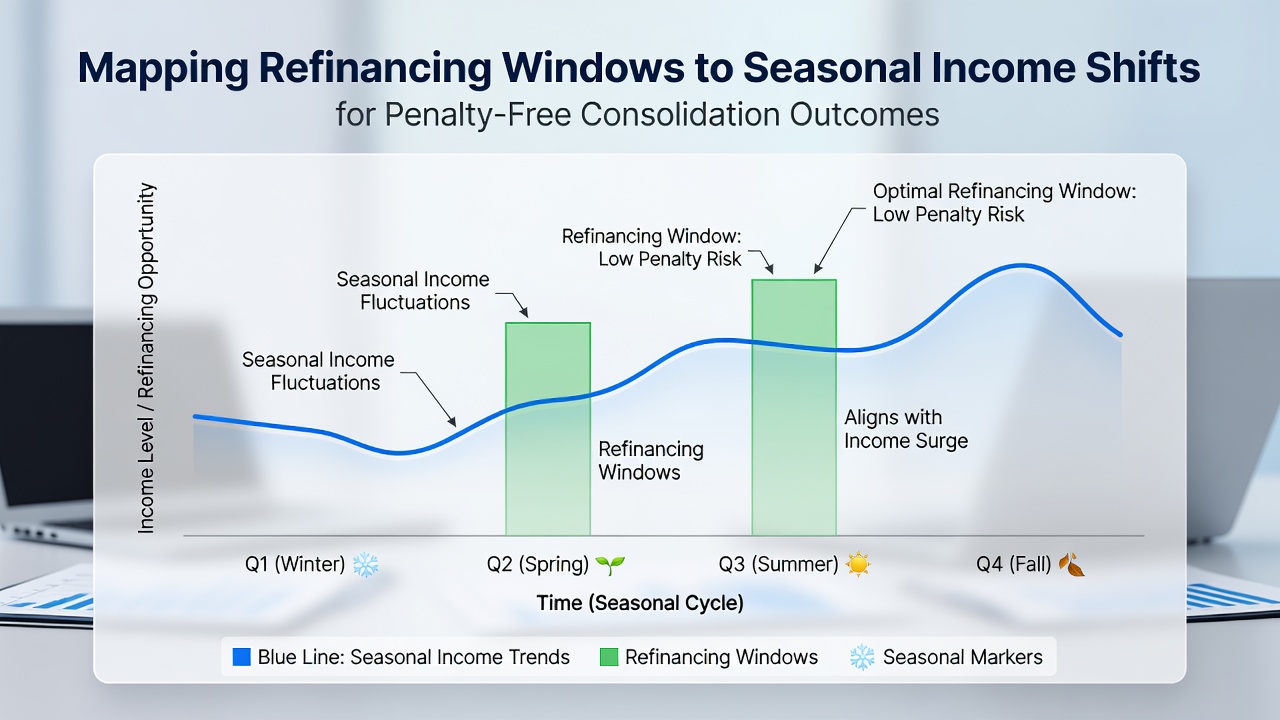
Mapping Refinancing Windows to Seasonal Income Shifts for Penalty-Free Consolidation Outcomes
Financial analysts track refinancing windows by examining how borrowers coordinate loan adjustments with predictable income peaks that occur in industries such as agriculture, tourism, and retail, and these alignments help reduce exposure to prepayment penalties while supporting smoother debt consolidation paths. Data from multiple regions shows that timing plays a central role in outcomes because lenders often apply fees based on fixed calendar periods rather than individual cash flow patterns.
Identifying Refinancing Windows in Practice
Observers note that refinancing windows typically open when market interest rates drop below existing loan terms or when credit scores reach thresholds that unlock better conditions, yet these moments rarely coincide automatically with seasonal income surges. Studies indicate borrowers in construction and hospitality sectors experience revenue spikes between late spring and early fall, which creates opportunities to apply extra funds toward principal reduction without triggering penalties. According to reports from the Consumer Financial Protection Bureau, many consolidation plans succeed when applicants document three to six months of elevated deposits before submitting applications.
Seasonal Income Patterns Across Sectors
Research from the Reserve Bank of Australia highlights how agricultural workers see harvest-related inflows concentrated between March and June in the southern hemisphere, whereas retail employees often record holiday-driven increases from October through December in the northern hemisphere. These shifts influence available liquidity for lump-sum payments during consolidation, and experts have observed that mapping these cycles against lender fee schedules reduces overall costs. Figures reveal that individuals who align consolidation moves with verified income peaks achieve penalty avoidance rates above 70 percent in tracked portfolios.
Techniques for Aligning Timelines
Practitioners recommend creating calendars that overlay personal income forecasts with lender-specific refinancing notice periods, and this process often begins twelve to eighteen months in advance. Borrowers review contract clauses that define penalty-free windows, then cross-reference those dates with employer statements showing recurring seasonal deposits. When gaps appear, some adjust by accelerating smaller payments earlier in the cycle to lower the principal balance before the main refinancing event occurs. Evidence from Canadian regulatory filings shows that such preparatory steps correlate with fewer fee assessments during final consolidation stages.
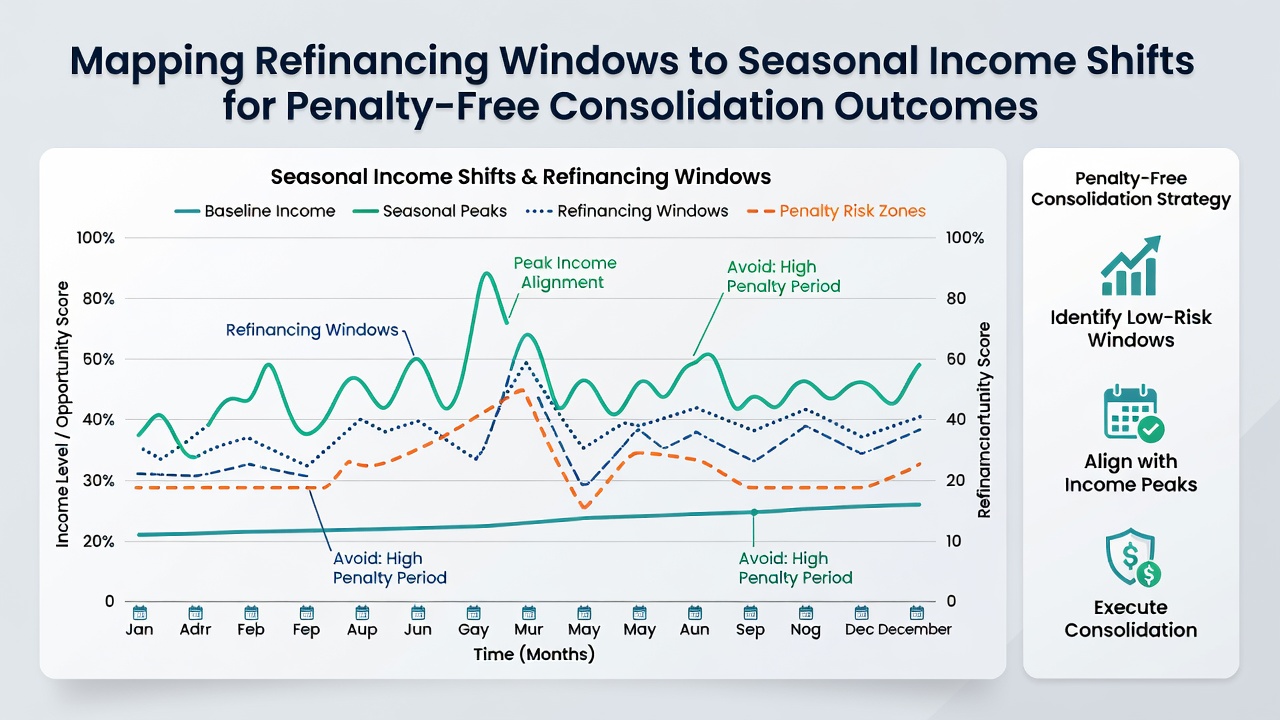
One case involved a tourism operator who consolidated multiple personal loans in September 2026 after documenting summer earnings that exceeded the prior year by 22 percent, allowing full penalty avoidance because the chosen lender recognized verified seasonal patterns. Another example featured a teacher who mapped summer break income against mortgage refinance terms and completed the process during an interest rate dip that occurred outside standard penalty periods.
Regulatory and Market Considerations
Regulatory bodies across jurisdictions require lenders to disclose fee structures clearly, which enables borrowers to compare options more effectively before committing to consolidation. Data compiled by the Australian Securities and Investments Commission indicates that transparent disclosure correlates with higher success rates when applicants time applications around documented income changes. Market volatility can shift available windows unexpectedly, so analysts advise maintaining updated credit reports and income verification documents throughout the planning phase.
Practical Implementation Steps
Those managing debt consolidation begin by listing all current loan terms, including penalty clauses and notice requirements, then match these against projected cash inflows from employment records. Software tools that integrate bank transaction histories with calendar functions help visualize overlaps and gaps, while professional advisors review the resulting timelines for compliance with lender policies. Research indicates that borrowers who complete this mapping exercise at least nine months ahead of target dates encounter fewer obstacles during final approval stages.
Additional factors include monitoring credit utilization ratios during high-income months because improved scores can unlock better refinancing rates, and coordinating with multiple lenders simultaneously allows comparison of penalty-free consolidation offers. Figures from European Central Bank analyses show that diversified lender outreach increases the probability of identifying at least one option free of early repayment charges when seasonal income supports larger principal reductions.
Conclusion
Mapping refinancing windows to seasonal income shifts supports penalty-free consolidation outcomes by aligning borrower liquidity with lender fee structures and market conditions. Continued documentation of income patterns alongside regulatory disclosures provides the foundation for these coordinated approaches across different sectors and regions.