Strategic Timing for Credit Obligation Mergers Based on Market Shifts and Life Event Patterns
Written by Viktor Keller · Oct 28, 2026
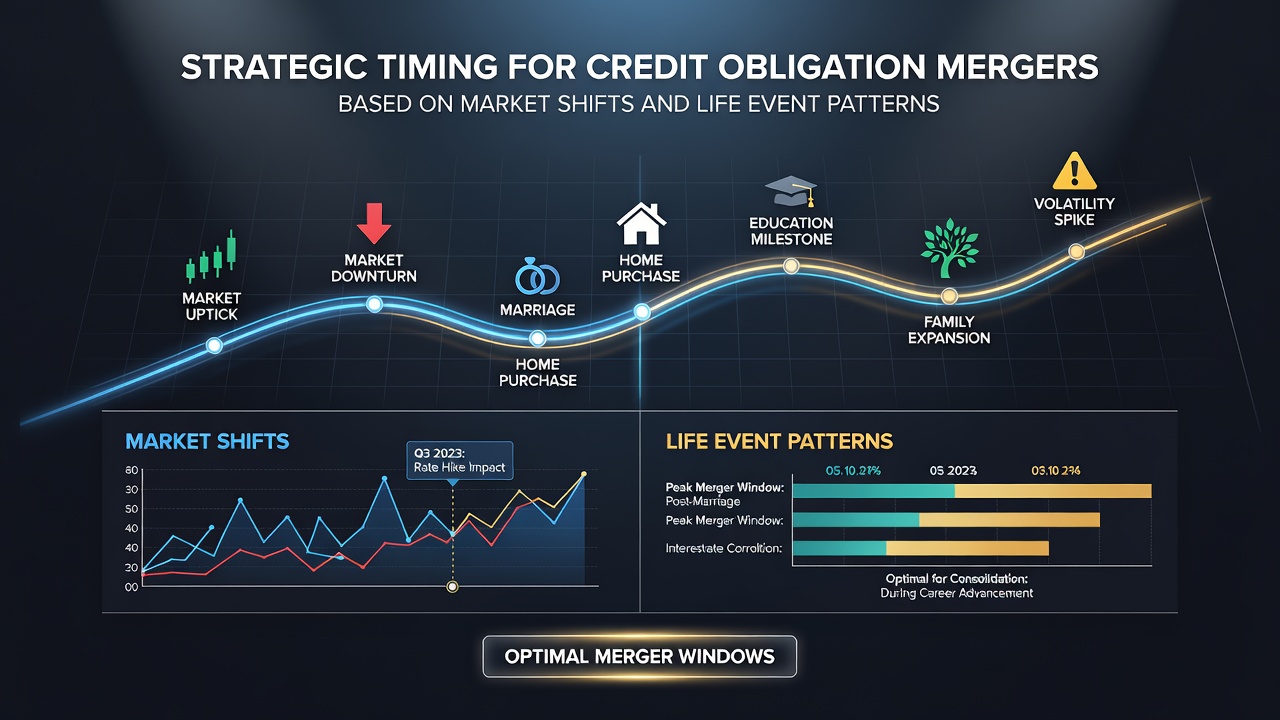
Strategic Timing for Credit Obligation Mergers Based on Market Shifts and Life Event Patterns
Market shifts create windows where credit obligation mergers become advantageous because interest rate movements directly affect consolidation costs while broader economic indicators signal when borrowing expenses may rise or fall. Observers note that central bank policies often drive these changes and data from the Federal Reserve shows how rate adjustments influence household debt strategies across multiple quarters. Life event patterns add another layer since events like career advancements or family expansions frequently coincide with improved cash flow that supports larger merged obligations without increasing monthly strain.
Market Shifts That Shape Consolidation Windows
Interest rate cycles determine much of the timing calculus because lower benchmark rates reduce the overall cost of combining multiple credit lines into a single structure. Researchers tracking these patterns have found that periods following sustained rate declines tend to produce higher volumes of obligation mergers as borrowers lock in reduced payments before conditions reverse. Economic volatility plays a parallel role since inflation spikes or employment dips can prompt lenders to tighten terms which makes acting ahead of such shifts more practical for those monitoring indicators closely.
October 2026 brought renewed attention to these dynamics as global markets responded to coordinated policy signals from several major economies and analysts documented increased merger activity among consumers who positioned their debt portfolios during the preceding months of relative stability. Data indicates that aligning merger decisions with these broader movements helps maintain manageable repayment structures even when external conditions fluctuate.
Life Event Patterns That Influence Timing Decisions
Career progression milestones often open consolidation opportunities because salary increases or promotions provide the income buffer needed to absorb merged payments without disrupting overall budgets. Those who have studied household finance patterns observe that individuals frequently pursue credit obligation mergers around the time of job changes or educational completions since these moments bring both higher earnings and clearer long-term financial visibility. Family expansions such as marriages or the arrival of children create similar openings as combined household resources and shared expenses make single consolidated obligations more efficient than maintaining separate accounts.
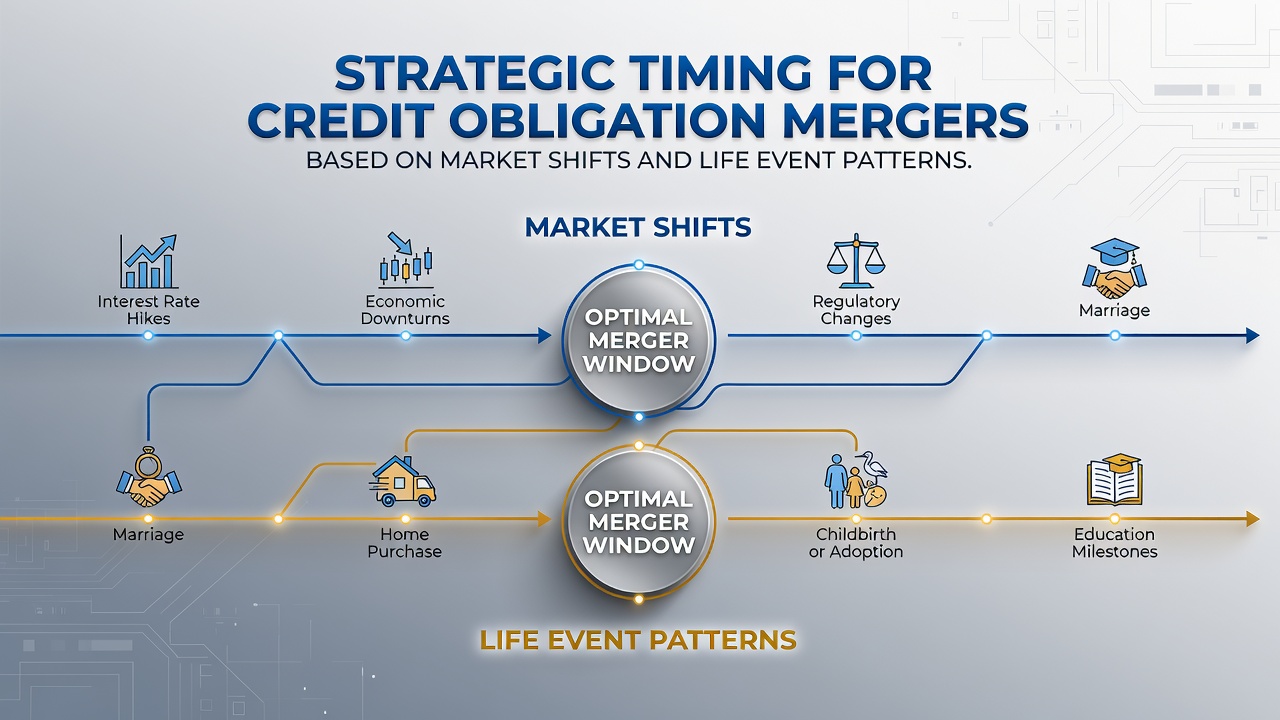
Home-related transitions also factor into the equation because purchasing or refinancing property frequently coincides with credit reviews that reveal opportunities to merge other obligations under more favorable terms. Experts tracking these correlations have noted that such events tend to cluster around predictable life stages which allows for advance planning when market conditions appear supportive. The intersection of these personal milestones with favorable rate environments produces the strongest outcomes according to multiple longitudinal studies on household debt management.
Combining Market and Life Event Data for Practical Timing
Effective strategies emerge when individuals cross-reference economic forecasts with their own anticipated life changes rather than treating these factors in isolation. Reports from the Bank of Canada demonstrate how regional rate environments interact with employment trends to create localized windows that differ from national averages and similar patterns appear in analyses from the Reserve Bank of Australia. People who integrate both sets of information often identify consolidation moments that reduce total interest paid while matching repayment schedules to upcoming income stability.
One documented approach involves monitoring credit utilization trends alongside personal milestones because rising scores during stable economic periods frequently unlock better merger terms from lenders. Academic reviews of consumer behavior have confirmed that those who time these actions around both market dips and personal progress points experience smoother transitions to unified repayment structures compared with those who act on only one variable.
Conclusion
Strategic timing for credit obligation mergers rests on the intersection of measurable market movements and predictable life event sequences because each element supplies independent signals that become more powerful when considered together. Data from multiple central banks and research institutions continues to highlight how alignment with these patterns supports more stable debt outcomes across varying economic conditions. Individuals who track both external indicators and personal transitions position themselves to execute mergers when terms and circumstances converge most favorably.