Synchronizing Repayment Timelines with Career Progression Benchmarks Amid Shifting Borrowing Costs
Written by Casey Coleman · Oct 14, 2026
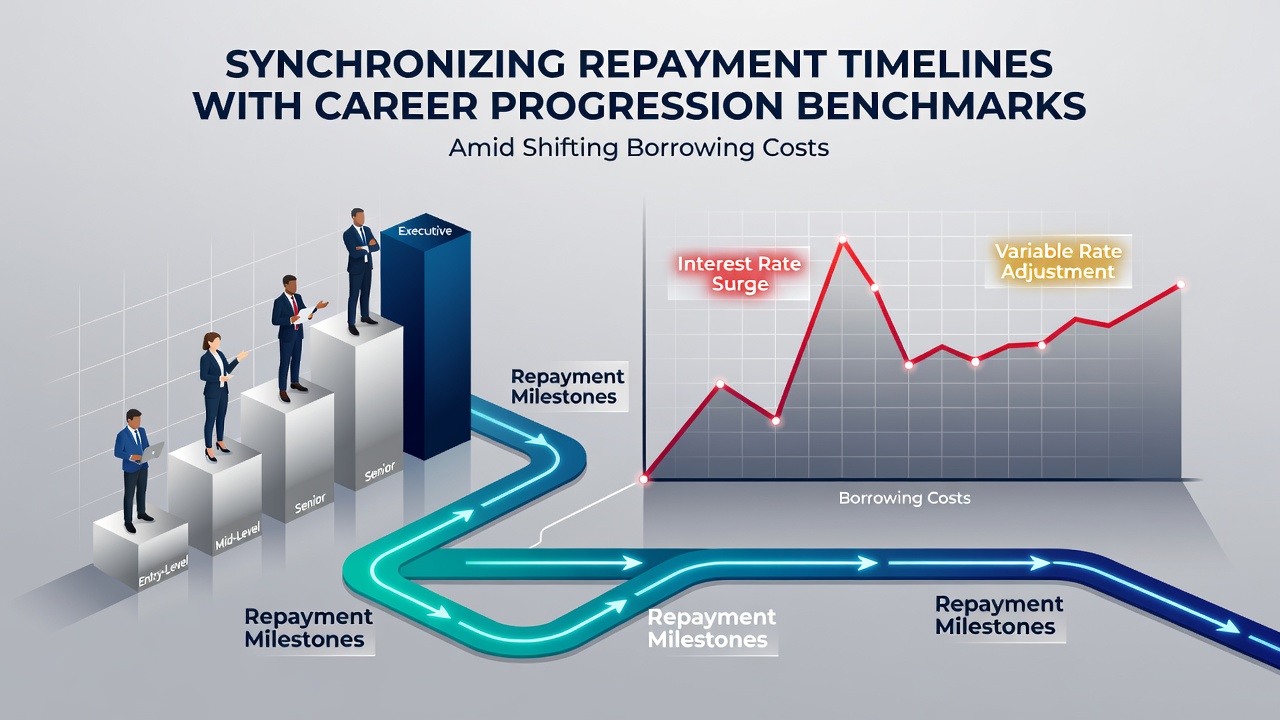
Synchronizing Repayment Timelines with Career Progression Benchmarks Amid Shifting Borrowing Costs
Financial observers note that synchronizing repayment timelines with career progression benchmarks allows borrowers to adjust debt obligations in response to salary increases, promotions, and professional milestones while borrowing costs continue to shift due to broader economic factors, and this coordination becomes particularly relevant as conditions evolve through October 2026 when central banks release updated rate projections.
Researchers at various institutions have documented how professionals often map loan terms against expected career trajectories such as entry-level positions advancing to mid-career roles or executive levels, and these alignments help maintain steady payment ratios even as variable rates respond to inflation data and policy decisions from bodies like the Federal Reserve and the European Central Bank.
Defining Career Progression Benchmarks in Debt Management
Experts track several standard benchmarks that frequently intersect with repayment planning including initial job placement after graduation, first major promotion within three to five years, mid-level salary adjustments around the seven-year mark, and senior position transitions that typically occur after a decade or more of experience, and data from labor statistics bureaus indicate these points often coincide with increased earning capacity that borrowers can direct toward accelerated principal reduction.
Studies from academic sources show that individuals who align repayment schedules with these markers achieve more consistent debt-to-income ratios compared with those using fixed timelines that ignore professional growth patterns, while shifting borrowing costs add another layer since fixed-rate products may lock in terms before a promotion occurs and variable products adjust monthly based on prevailing indexes.
Impact of Changing Borrowing Costs on Timeline Adjustments
Borrowing costs have fluctuated notably in recent cycles with rate environments moving from accommodative policies during recovery periods to tighter stances aimed at controlling inflation, and as of October 2026 analysts report stabilization signals in several major economies that could influence refinancing decisions tied to upcoming career events.
Those who monitor these changes frequently review amortization schedules at each benchmark to determine whether extending or shortening terms better matches projected income growth, and reports from the Reserve Bank of Australia highlight similar patterns in regional markets where borrowers adjust after salary reviews to avoid overextension during periods of rising costs.
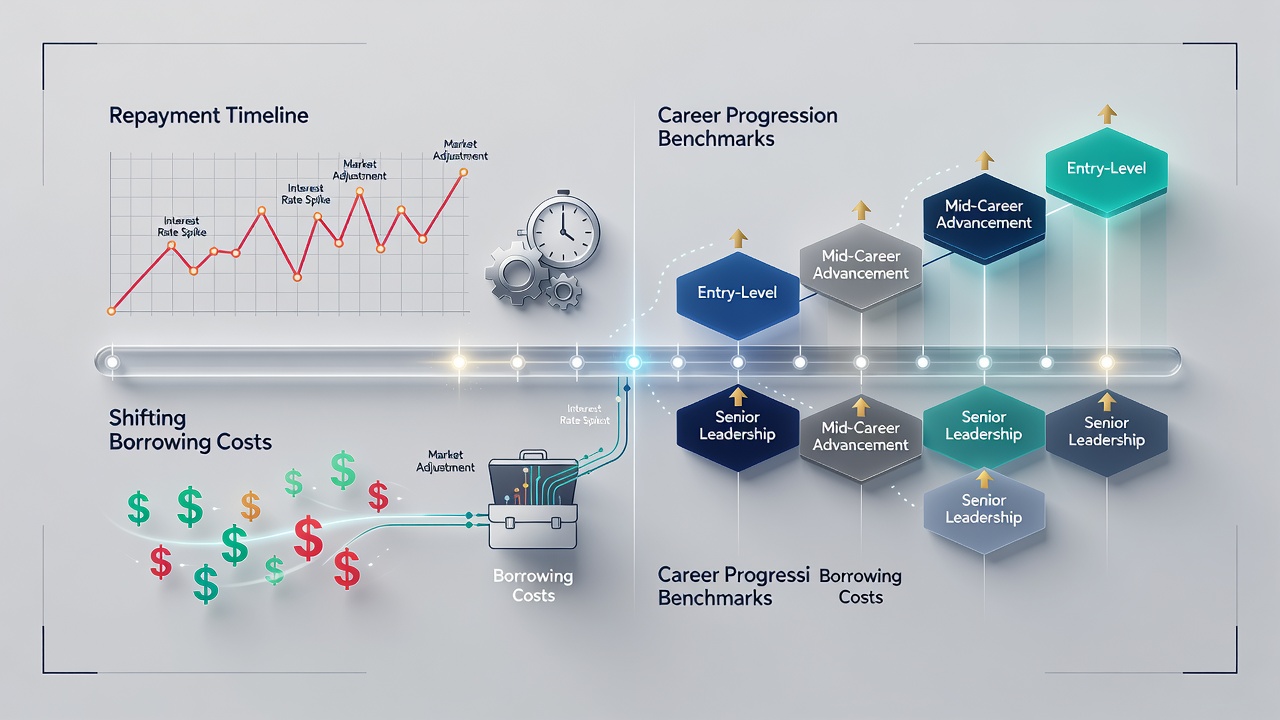
Practical Approaches Observed Across Borrower Groups
Professionals in fields such as technology, healthcare, and finance often recalibrate repayment plans following performance reviews or contract renewals, and case examples compiled by research institutions demonstrate that starting with shorter initial terms paired with options for extension provides flexibility when rates rise unexpectedly.
Take one mid-level manager who reached a benchmark promotion in year four of a loan term and used the resulting income increase to switch from interest-only payments to full amortization, which reduced total interest paid despite concurrent rate increases in the broader market, and similar adjustments appear in datasets tracking consumer credit behavior across multiple countries.
- Entry-level alignment: Graduates frequently select five-year terms that match early career stability periods before anticipated raises.
- Mid-career recalibration: Borrowers review terms at promotion points to incorporate higher payments without straining cash flow.
- Senior-level optimization: Longer-tenured individuals may consolidate multiple obligations when reaching executive compensation levels amid lower rate windows.
Evidence from industry reports suggests these synchronized approaches correlate with lower default rates during volatile cost periods because payments scale with actual earnings rather than remaining static, and regulatory updates from the Bank of Canada emphasize transparent disclosure of variable rate risks to support such planning.
Data Patterns Emerging in 2026
Current figures reveal that average time between career benchmarks has shortened slightly in high-growth sectors due to rapid skill acquisition and remote work opportunities, and this compression allows more frequent opportunities to reassess repayment structures against prevailing borrowing costs through October 2026 and beyond.
Analysts note that borrowers who incorporate these patterns into initial loan structuring report smoother transitions when rates move, whereas rigid schedules without benchmark integration show higher sensitivity to cost shifts according to aggregated consumer finance surveys.
Conclusion
Observers continue to document how synchronizing repayment timelines with documented career progression benchmarks provides a structured response to shifting borrowing costs, and available data through October 2026 supports the use of flexible terms that accommodate both professional advancement and economic variability across regions.